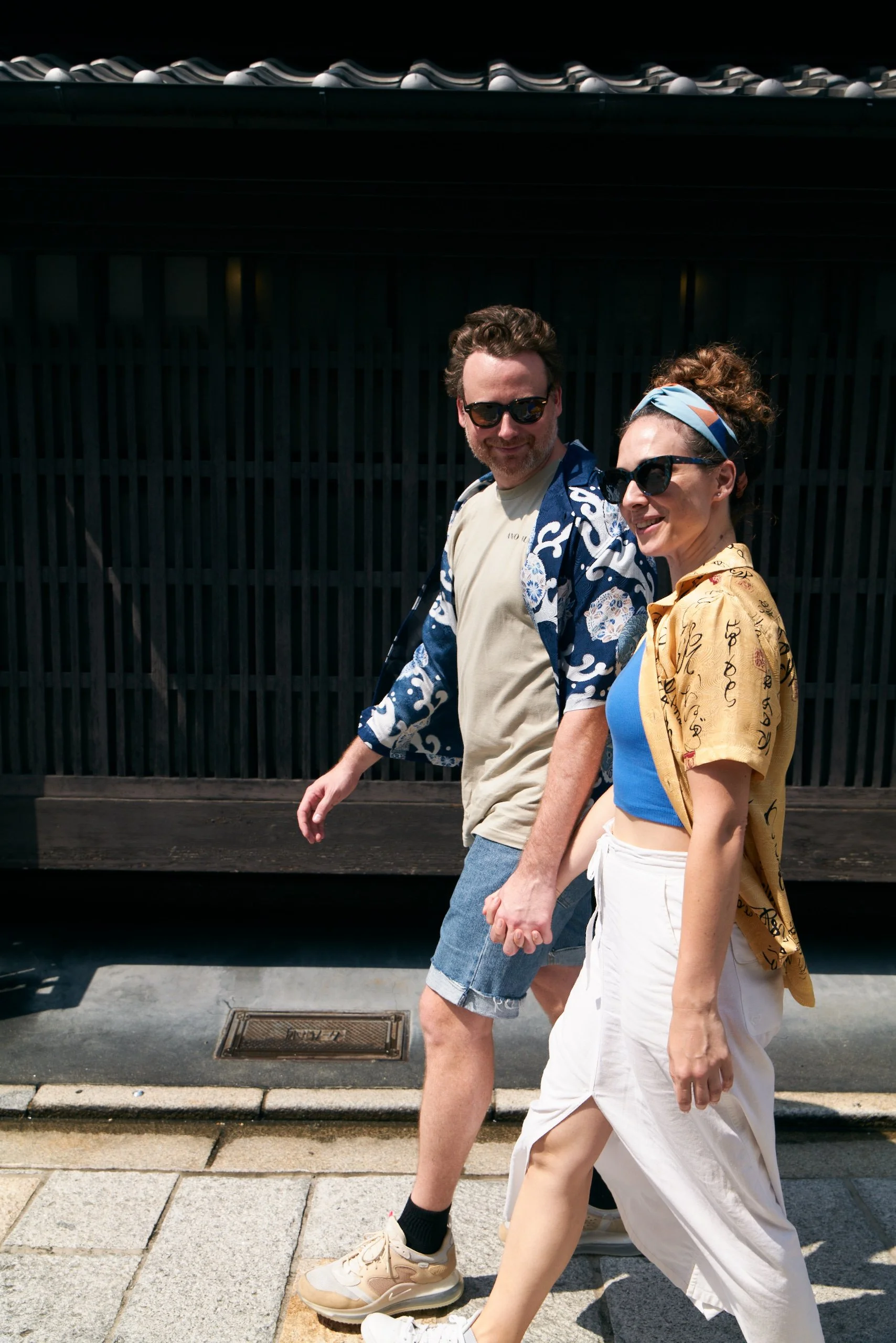
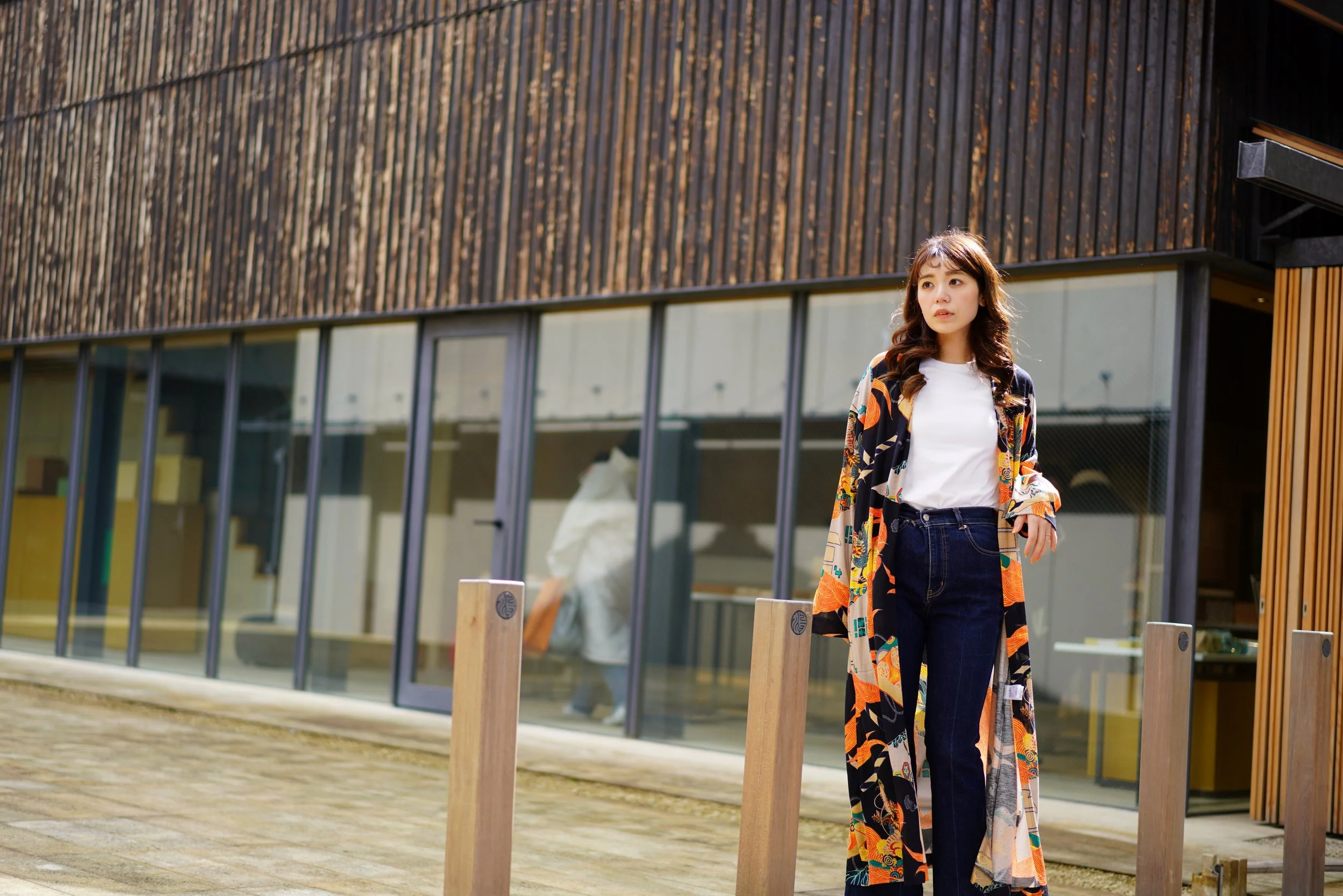
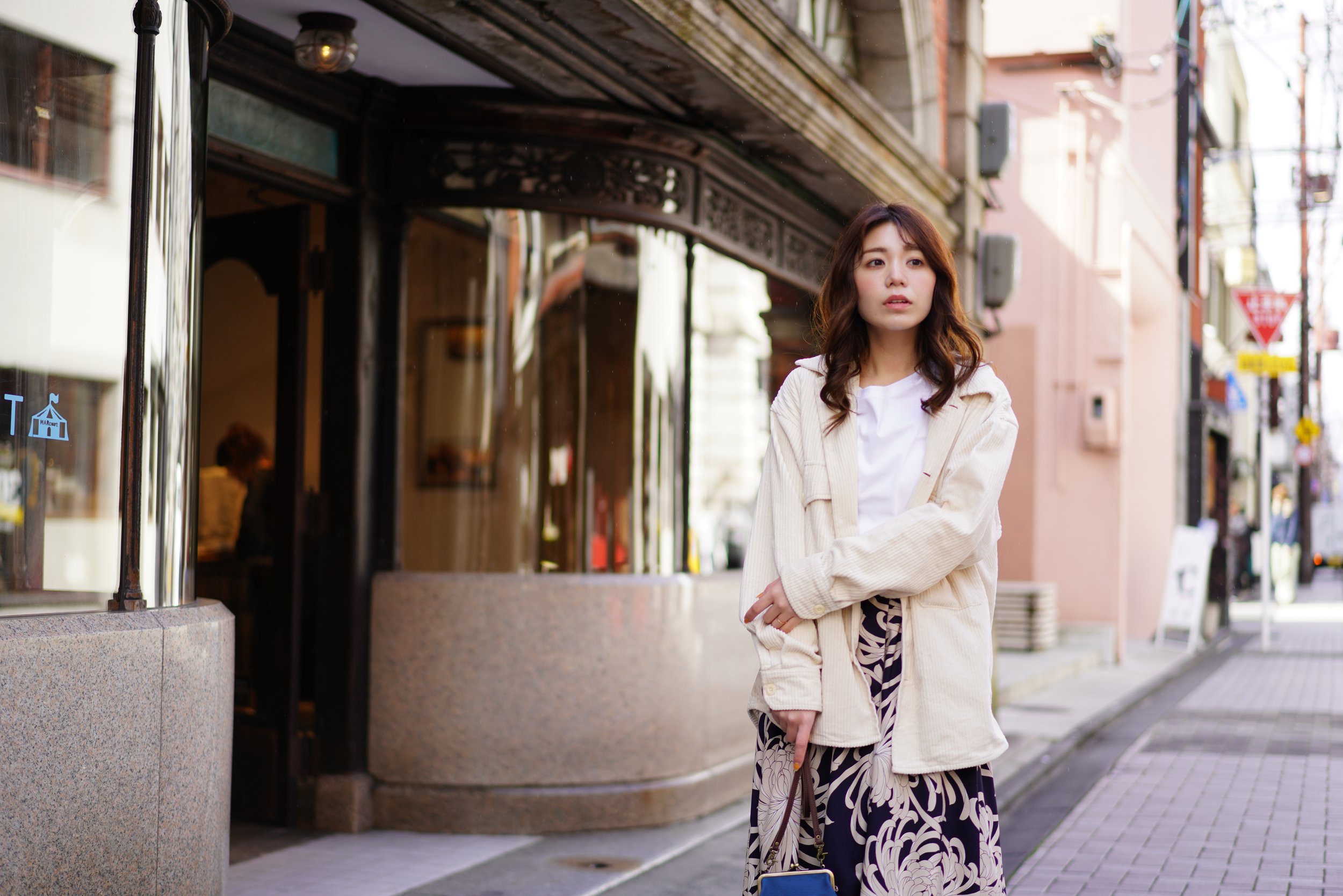
Japanese Name/ 波に兎 (Nami ni Usagi)
-About-
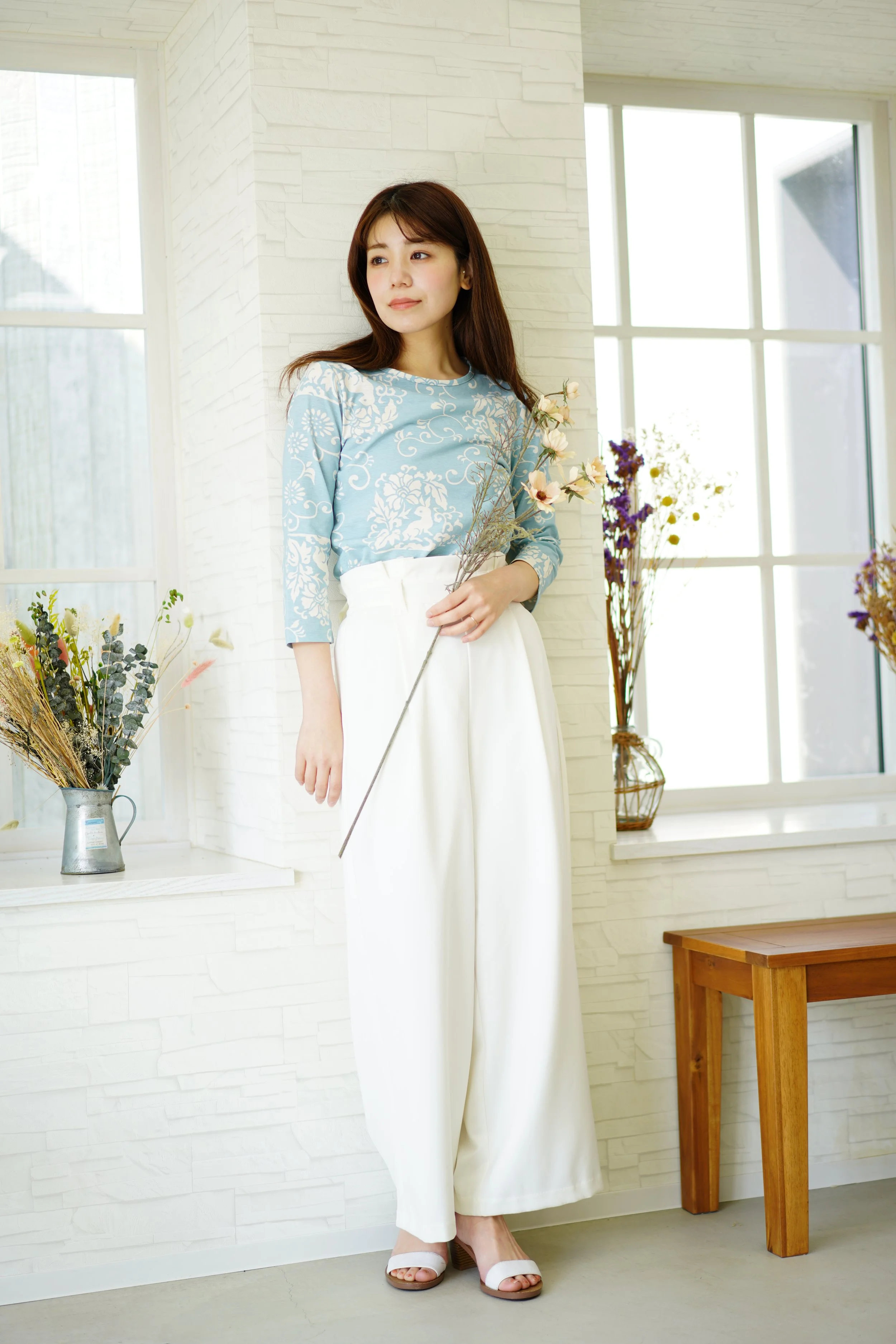
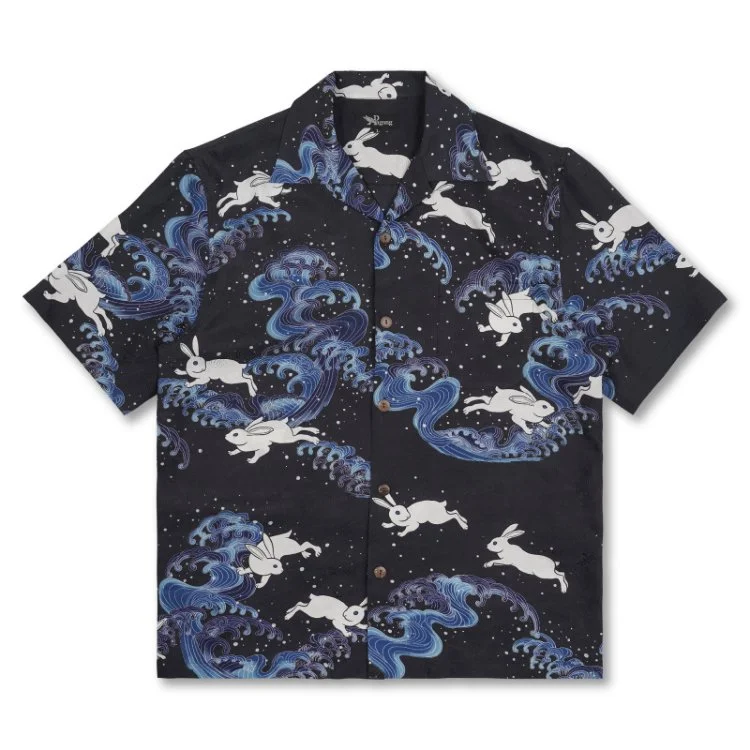
In Japan, rabbits are known as “messengers from the gods, or “kami”, and represent intelligence, prosperity, and moving forward especially in new directions.
In this dynamic, fun-loving pattern, rabbits are seen frolicking with “standing waves”, or “seigaha” taking on an even deeper traditional meaning representing surges of good fortune, power against adversity, and resilience.
・Currency : US Dollar (USD)
・100% Silk (Custom-woven Jacquard )
・Made in Japan
・Classic-fit Aloha shirt
・Coconut buttons
・Dry-clean
Color / (Blue) Size Chart
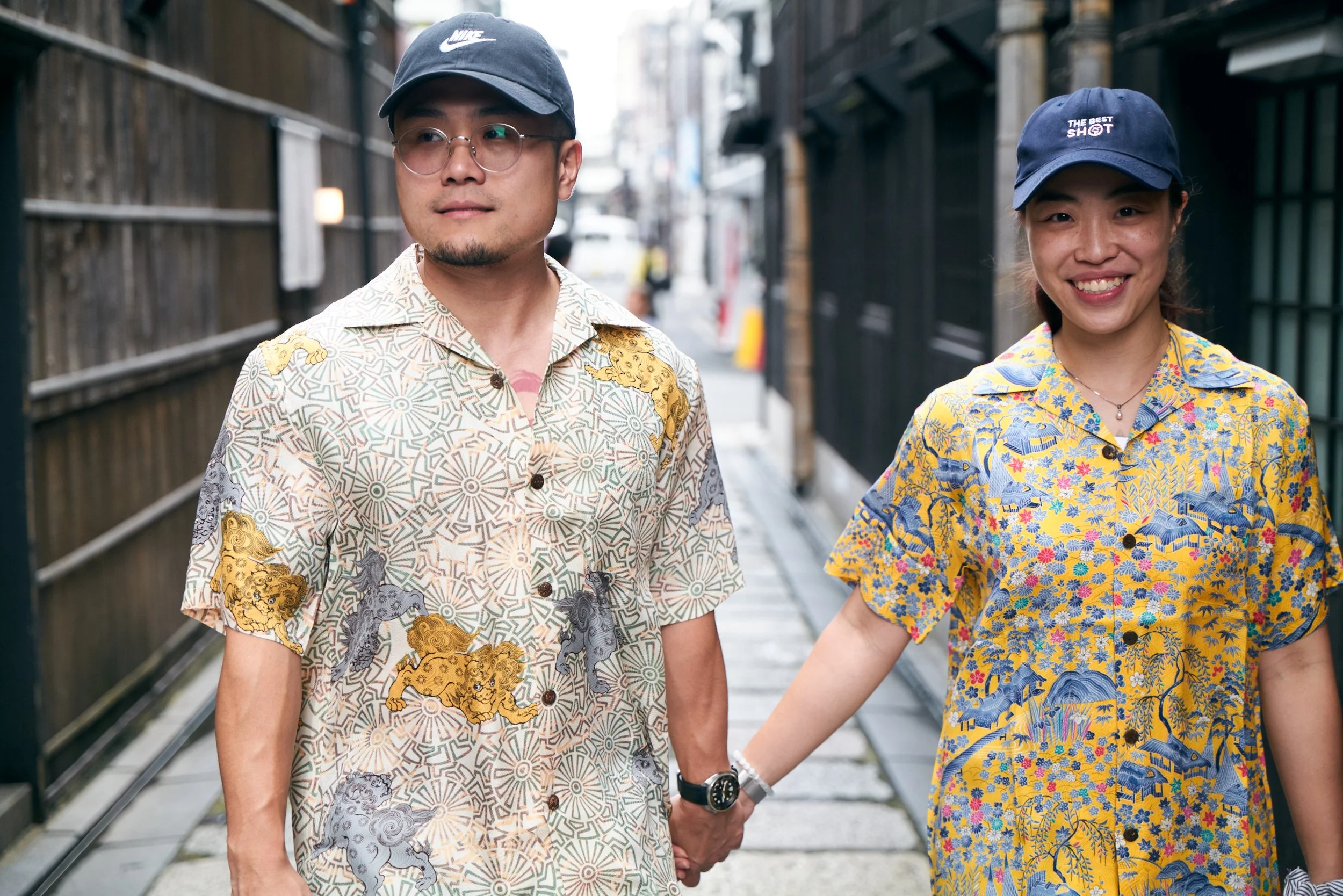
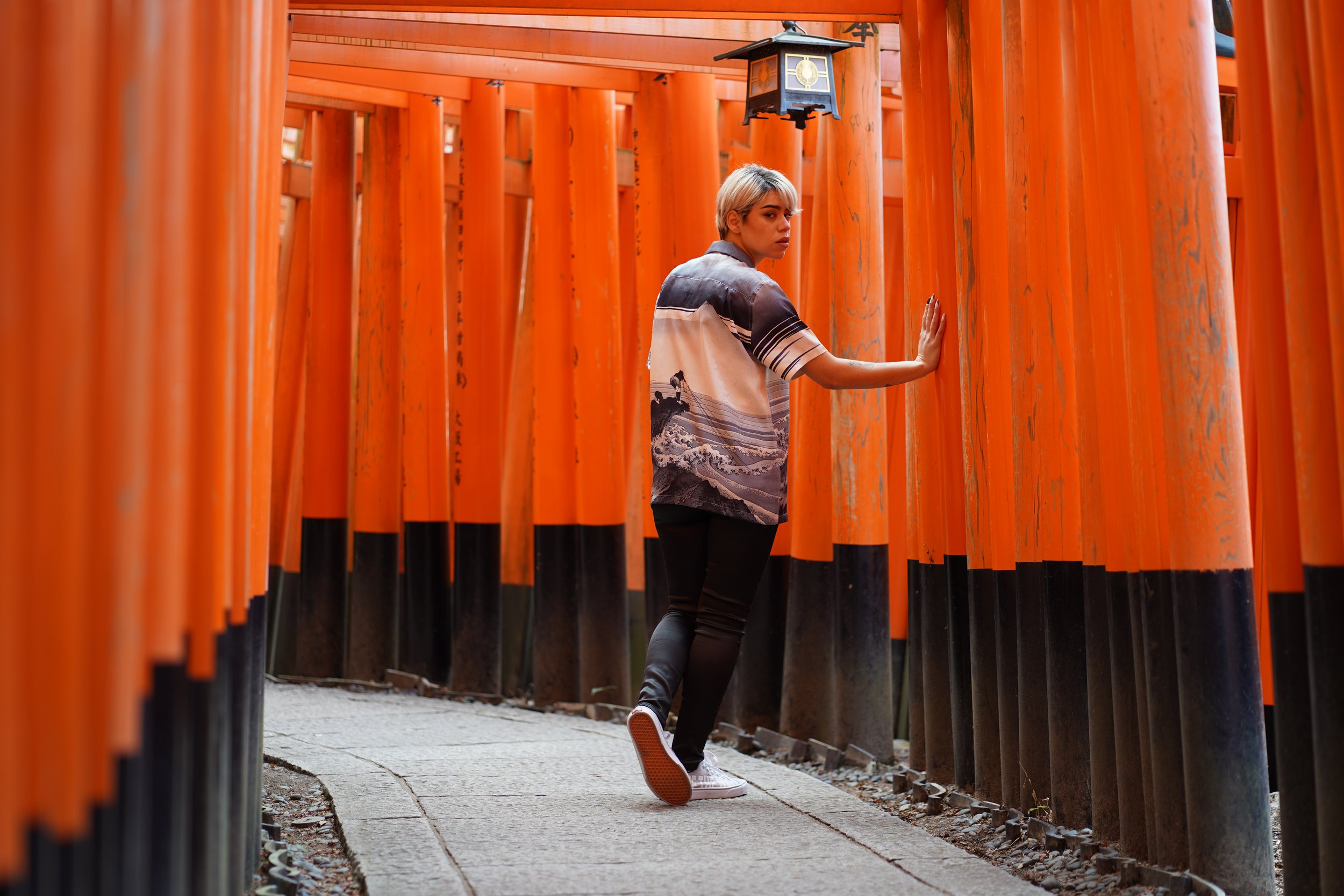
Japanese name/ 甲州石班澤 (Koshu Kajikazawa)
-About-
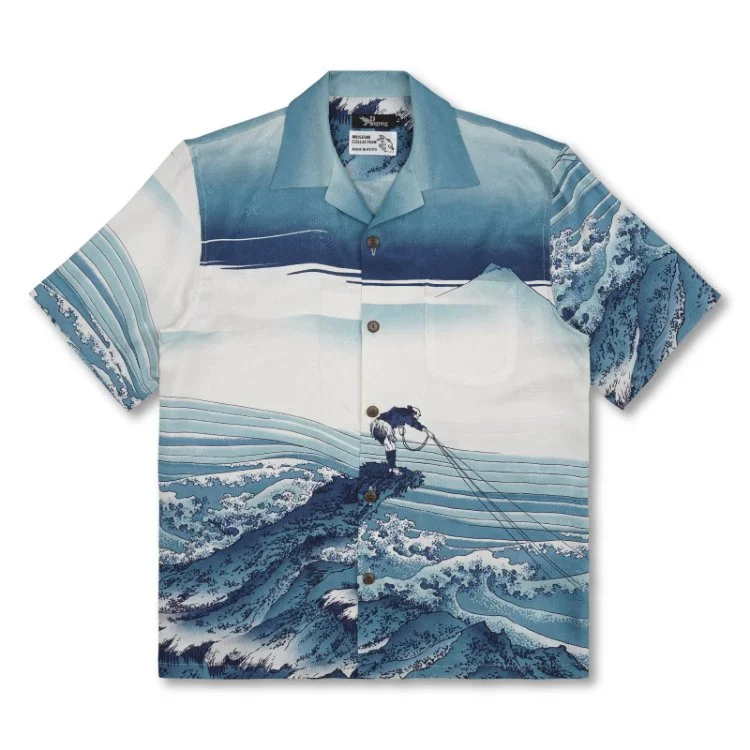
At the age of seventy, with a career of over 50 years experience making traditional woodblock prints, Katsushika Hokusai (1760-1849), undertook making his now-famous series “Thirty Six Views of Mount Fuji”, honoring the most spiritual and sacred mountain in all Japan. The traditional technique he used was most common at the time, ukiyo-e, literally meaning “pictures of the floating world”.
“Koshu Kajikazawa”, is the name of a place between Tokyo and Kyoto where two rivers meet, the 14th print of the series, which we the viewer have the pleasure of seeing through Hokusai’s eyes.
In this masterpiece, the fisherman’s pose intentionally reflects the shape of Mount Fuji in the background, an example of Hokusai’s “signature” compositional genius, no doubt contributing to Hokusai becoming the most renown and respected Japanese artist of all time.
We have been been given official permission to use this extraordinary woodblock print from the Metropolitan Museum of Art in New York , to which Pagong has implemented the dye technique of Kyoto Yuzen.
・Currency : US Dollar (USD)
・100% Silk (Custom-woven Jacquard )
・Made in Japan
・Classic-fit Aloha shirt
・Coconut buttons
・Dry-clean
・Model (6 feet)
Color / Black and Multi-color Size Chart
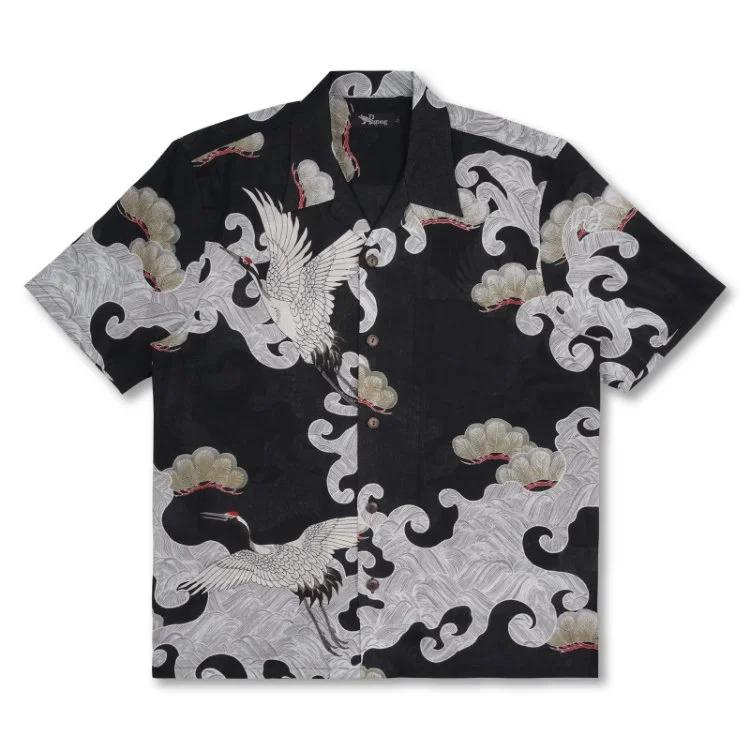
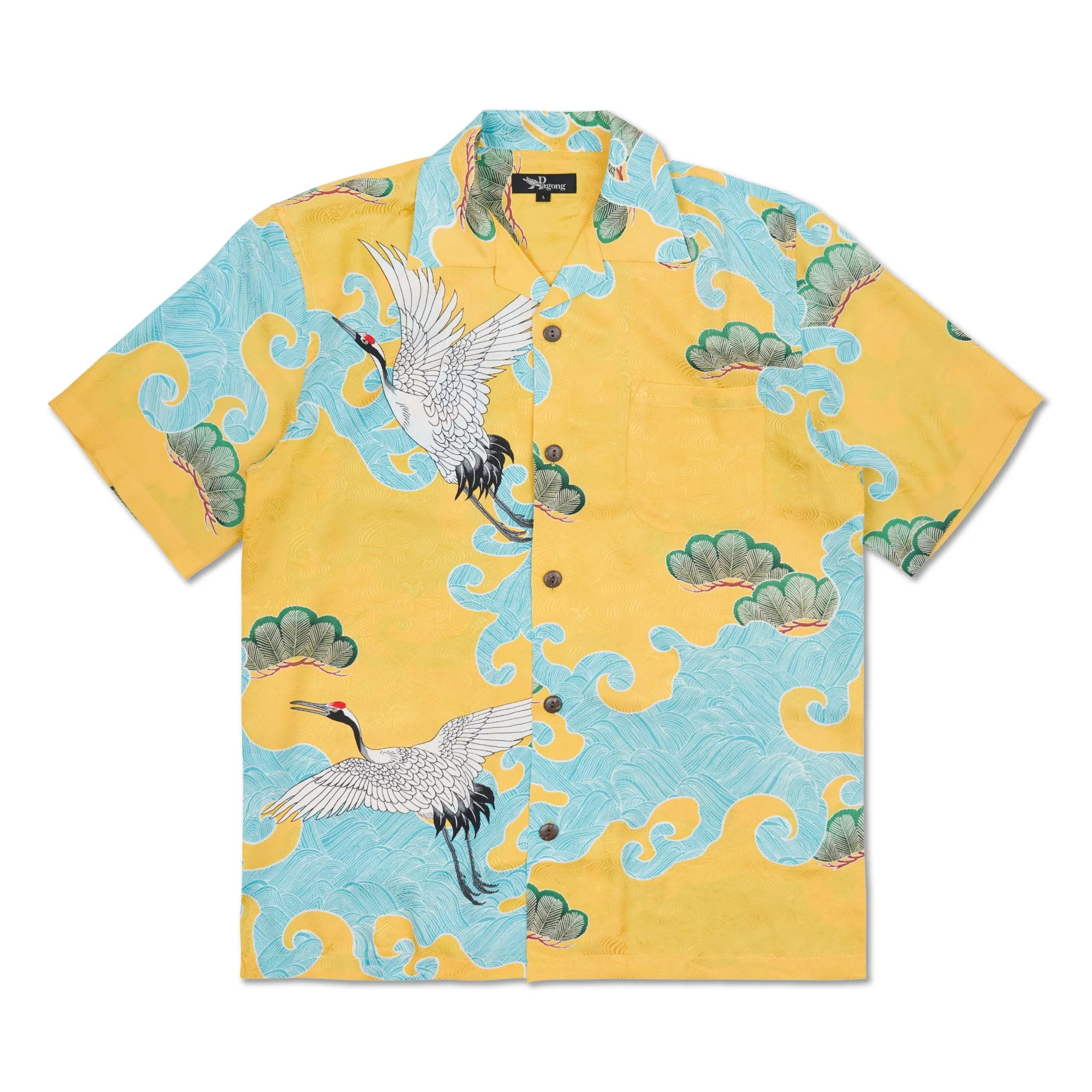
apanese name /松波と鶴(しょうはとつる)
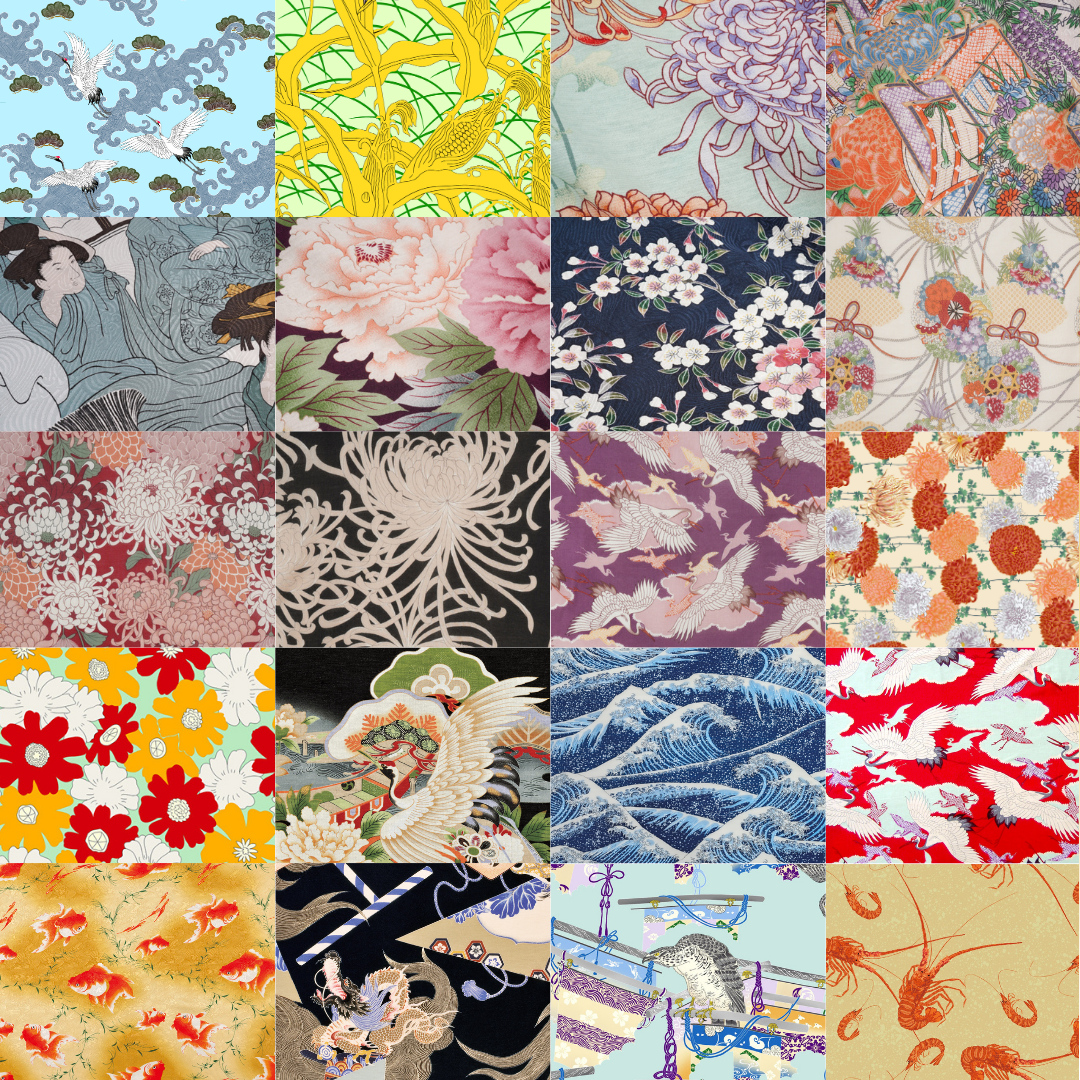
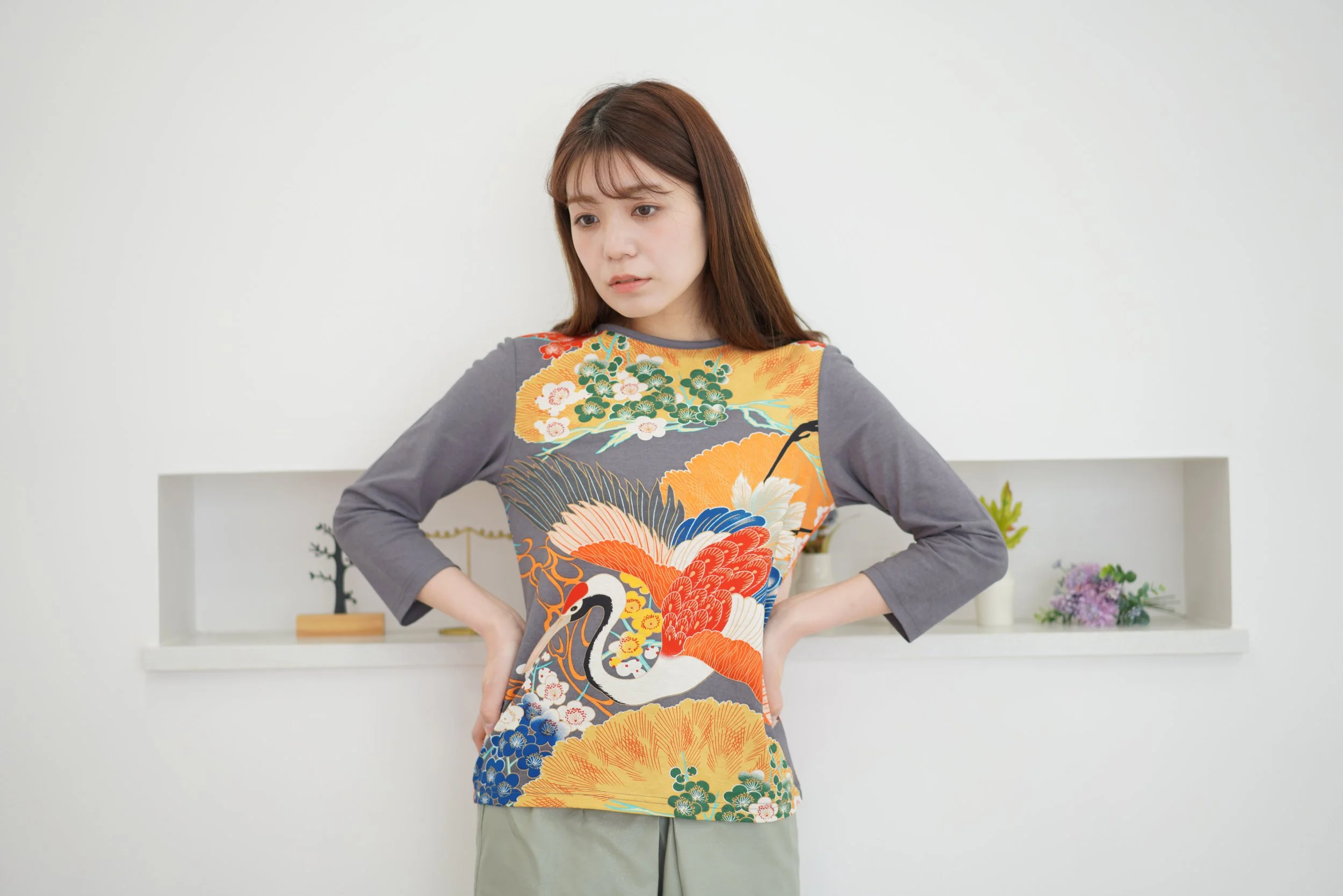
Among Japanese motifs, the crane and pine have long been a beloved combination symbolizing good fortune.
Worshipped as messengers of the gods, the crane brings happiness and joy to people.
On the other hand, the pine is an evergreen tree that remains green year-round and has strong roots in the earth. Its appearance embodies wishes for eternal youth and longevity, unwavering sincerity, and prosperity.
When these two designs come together in harmony, they represent "everlasting happiness" and "a spirit living with hope."
In "Pine Waves and Cranes," a pine tree is depicted atop gently lapping waves, with a crane dancing majestically above it.
Since ancient times, waves have been considered an auspicious motif symbolizing "everlasting energy" and the "cycle of life."
The waves' gentle swaying motion reflects the transitions of human life and nature.
The pine supports the earth with its strength, while the crane dances lightly through the sky.
While each symbolizes a different world, they resonate together within a single design,
evoking a sense of the connection between heaven and earth, and the beauty of the symbiosis between nature and man.
This pattern embodies a gaze toward both the unchanging and the ever-changing.
The tranquility of the pine, the movement of the waves, and the elegance of the cranes resonate with each other,
embodying the spirit of harmony, respect for nature, and prayers for the future that Japanese people have long cherished.
"Pine Waves and Cranes" is a design that inherits the elegance of classic motifs, but is newly drawn with a modern sensibility.
Wearing it will envelop you in a calm and dignified air,
bringing a quiet elegance and sense of security to the heart of anyone who sees it.
・Currency : US Dollar (USD)
・70% Cotton / 30% Linen
・Classic-style Aloha shirt
・Coconut buttons
・Wash by hand
・Made in Japan
Color / Black
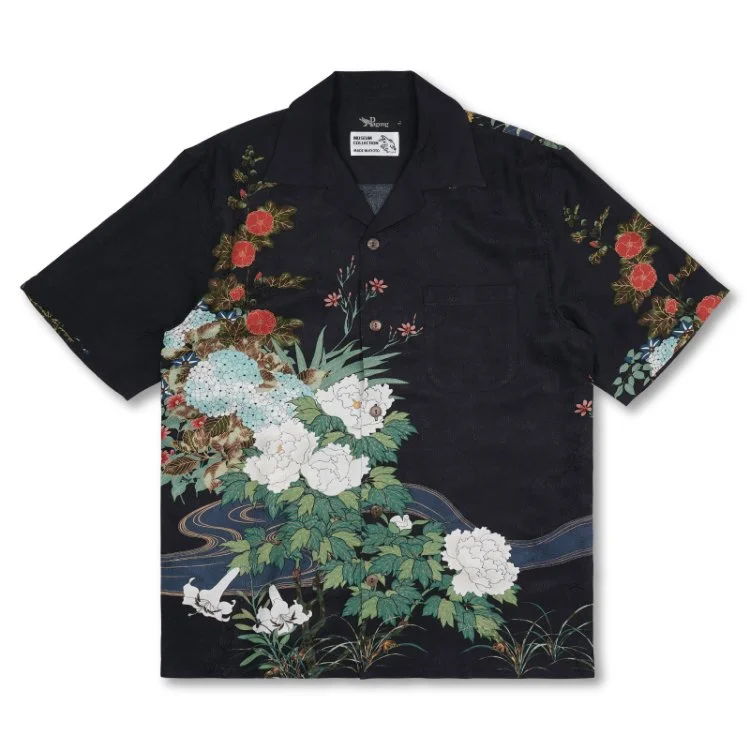
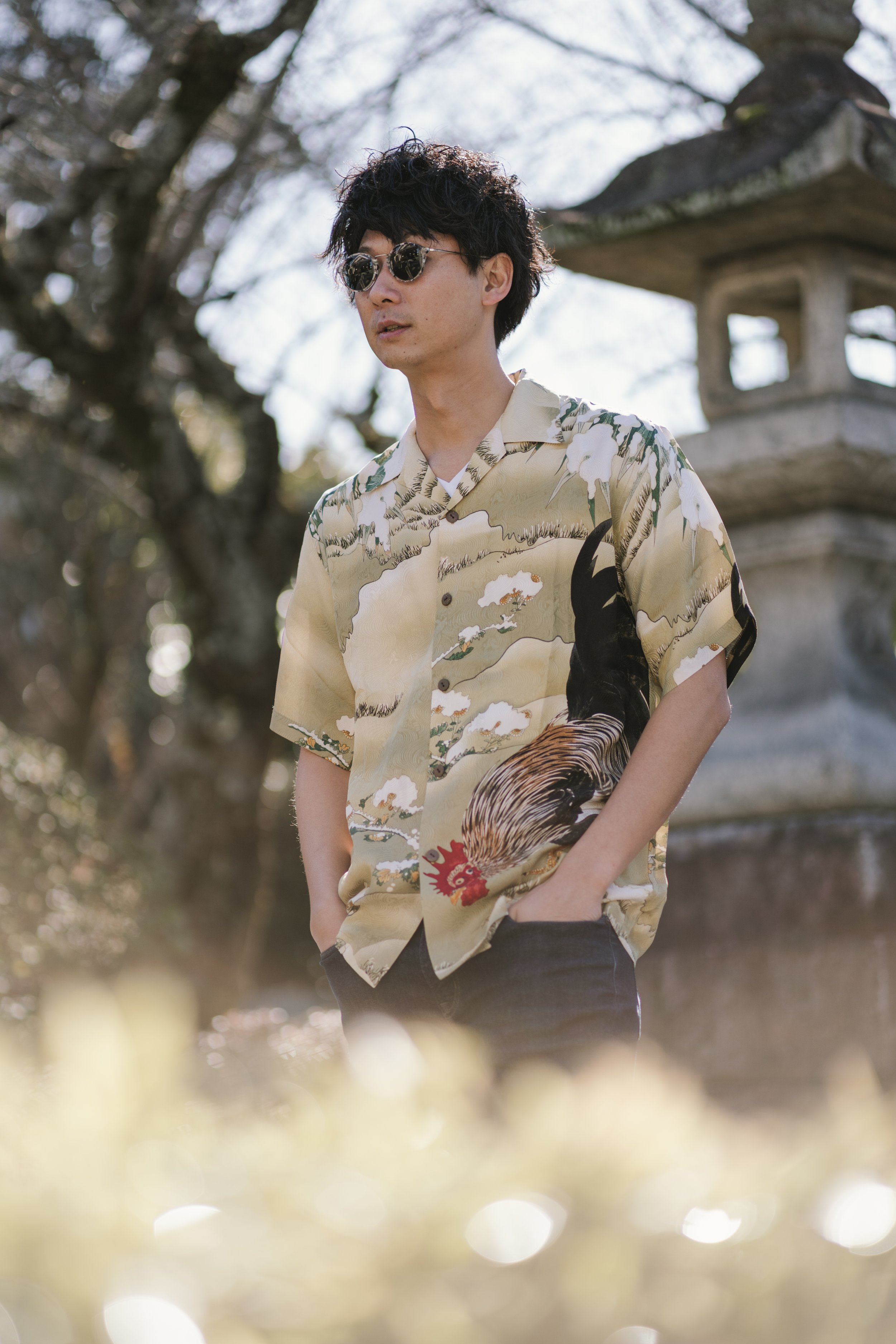
Japanese name / 流水四季草花図 (Ryusuishikisoukazu / Sakai Houitsu)
-About-
Sakai Hōitsu, (August 1, 1761 to January 4, 1829) was born and raised in Edo, modern-day Tokyo.
A master painter, he was also a much-beloved poet of the late Tokugawa period (1603–1867).
This exquisite painting, originally from a folding screen “Flowing Water With Plants and Flowers of the Four Seasons” has flowers which move from spring to summer on the right, and flowers moving from autumn to winter on the left.
The water flowing in the center of the painting is a symbol for the universe, purifying all difficulties.
A collaboration with the TOKYO NATIONAL MUSEUM.
・Currency : US Dollar (USD)
・100% Silk (Custom-woven Jacquard )
・Made in Japan
・Classic-fit Aloha shirt
・Coconut buttons
・Dry-clean
Color / Beige and Multi-color Size Chart
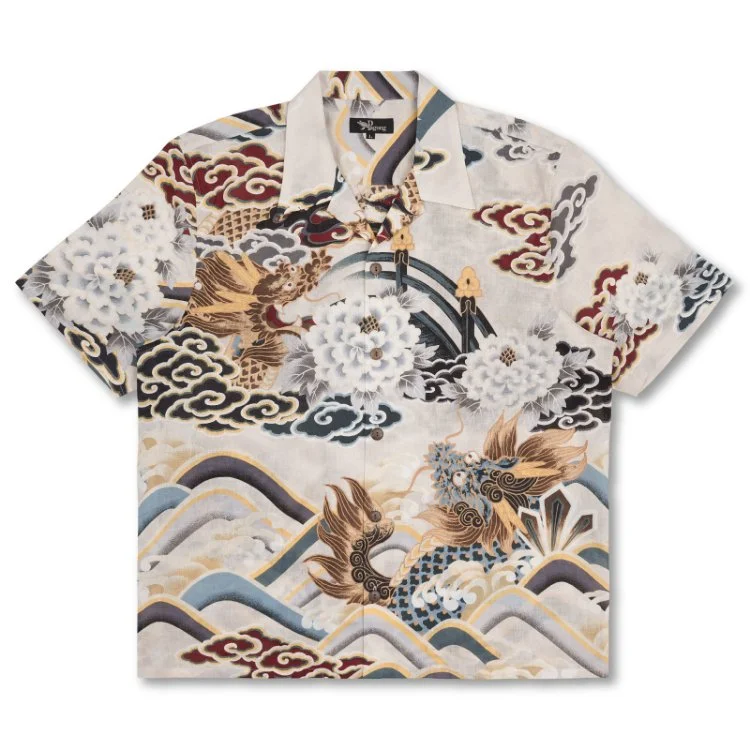
Japanese name / 龍と麒麟 - Ryu to Kirin
-About-
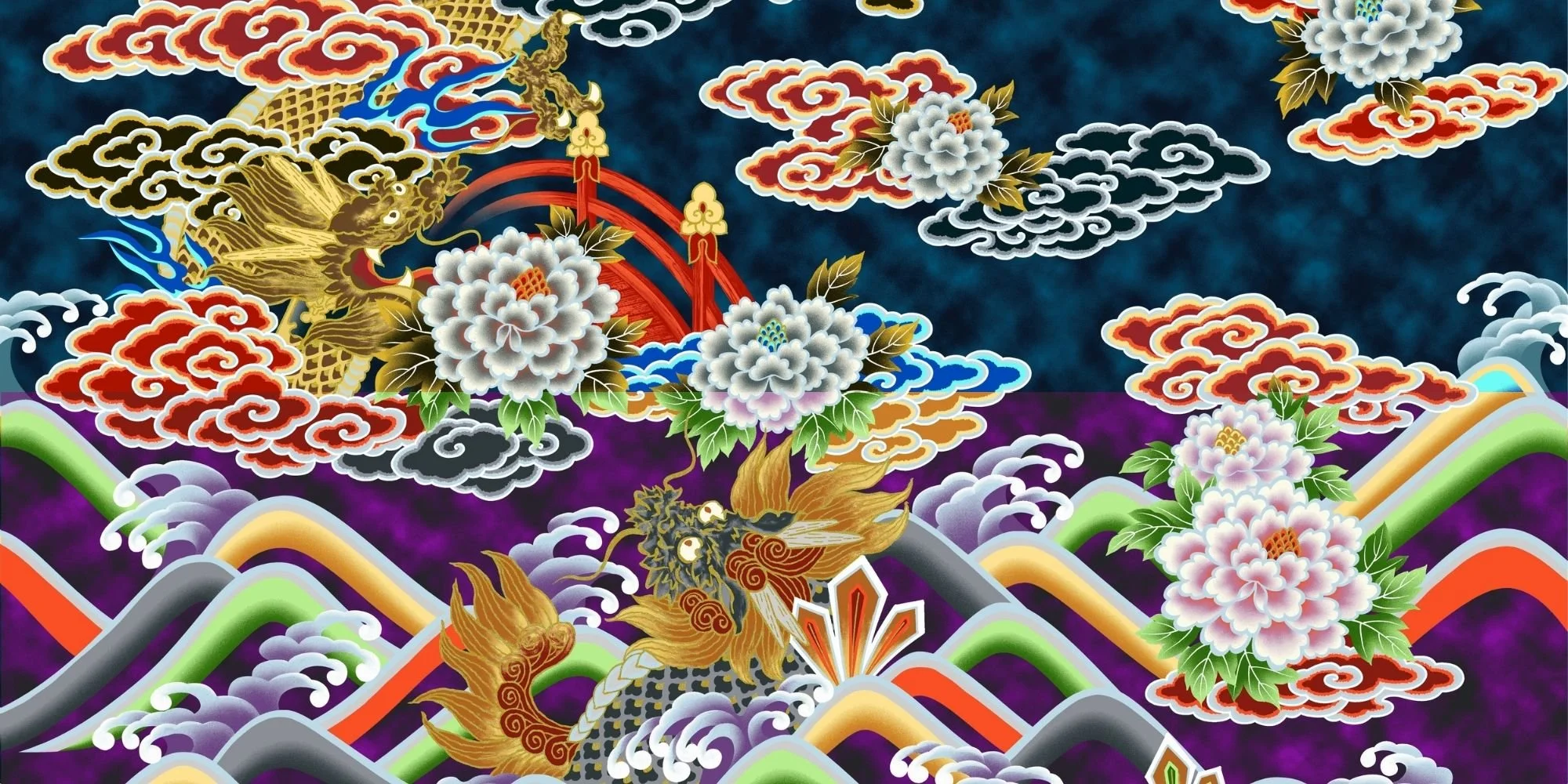
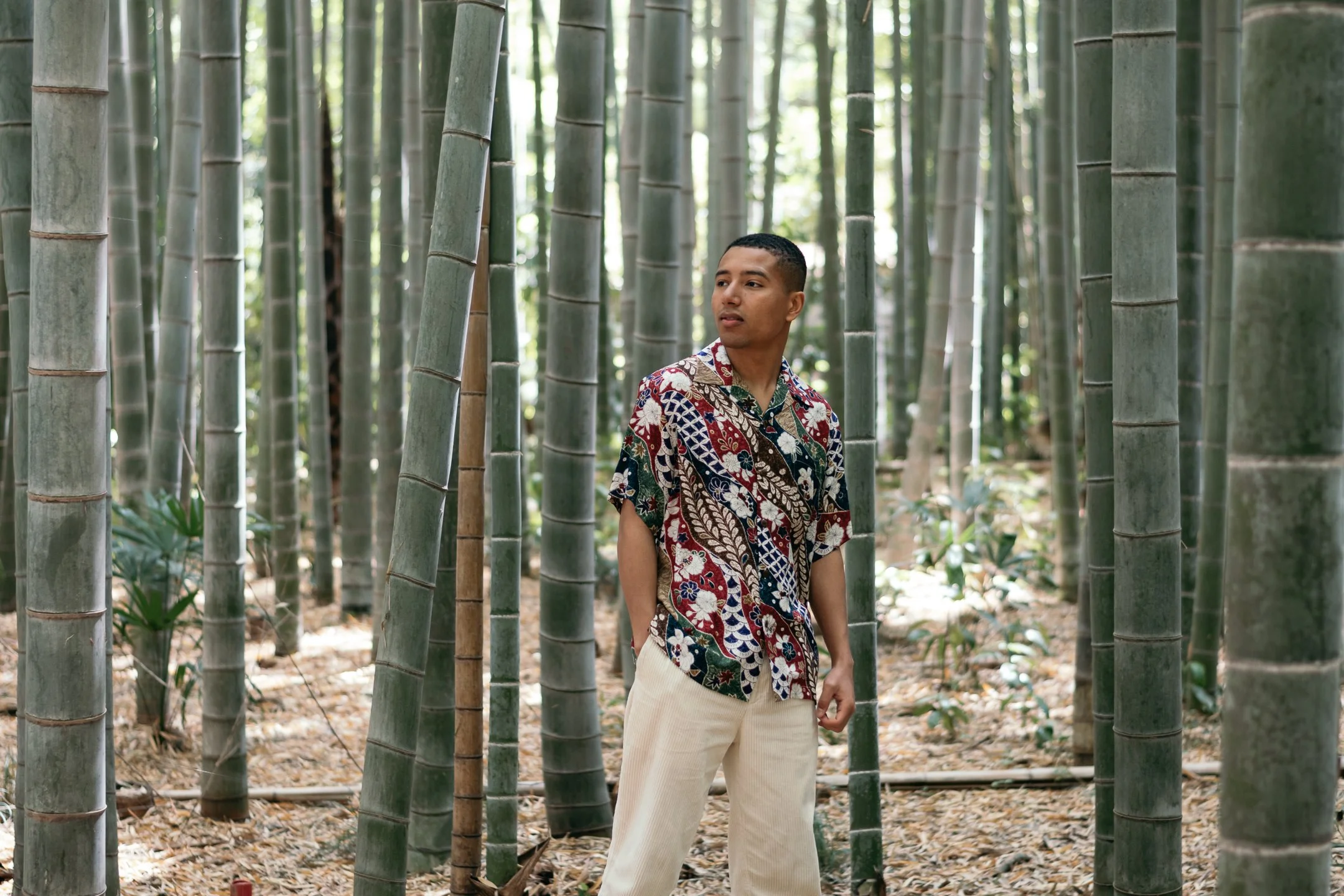
This auspicious pattern, depicting a dragon and a Kirin facing one another, has long been cherished as a symbol of harmony between heaven and earth and the union of power and virtue.
The dragon is a sacred being believed to ascend to the heavens, summon clouds, and bring life-giving rain. Often associated with thunder and the sky, it has been revered as a manifestation of celestial power.
In contrast, the Kirin is known as a benevolent and gentle guardian, said to herald times of peace and wisdom. Though it bears horns, it is believed to possess such compassion that it would not even harm a single living creature.
Traditionally, the dragon represents the energy of the heavens, while the Kirin embodies the virtue of the earth. When these two stand together, they express the moment when heaven and earth are united. The vermillion bridge at the center symbolizes connection—between sky and land, humanity and nature, and differing forces brought into balance.
The scene of the dragon and Kirin facing one another captures the meeting of strength and virtue, merging in harmony and giving rise to renewal and new beginnings.
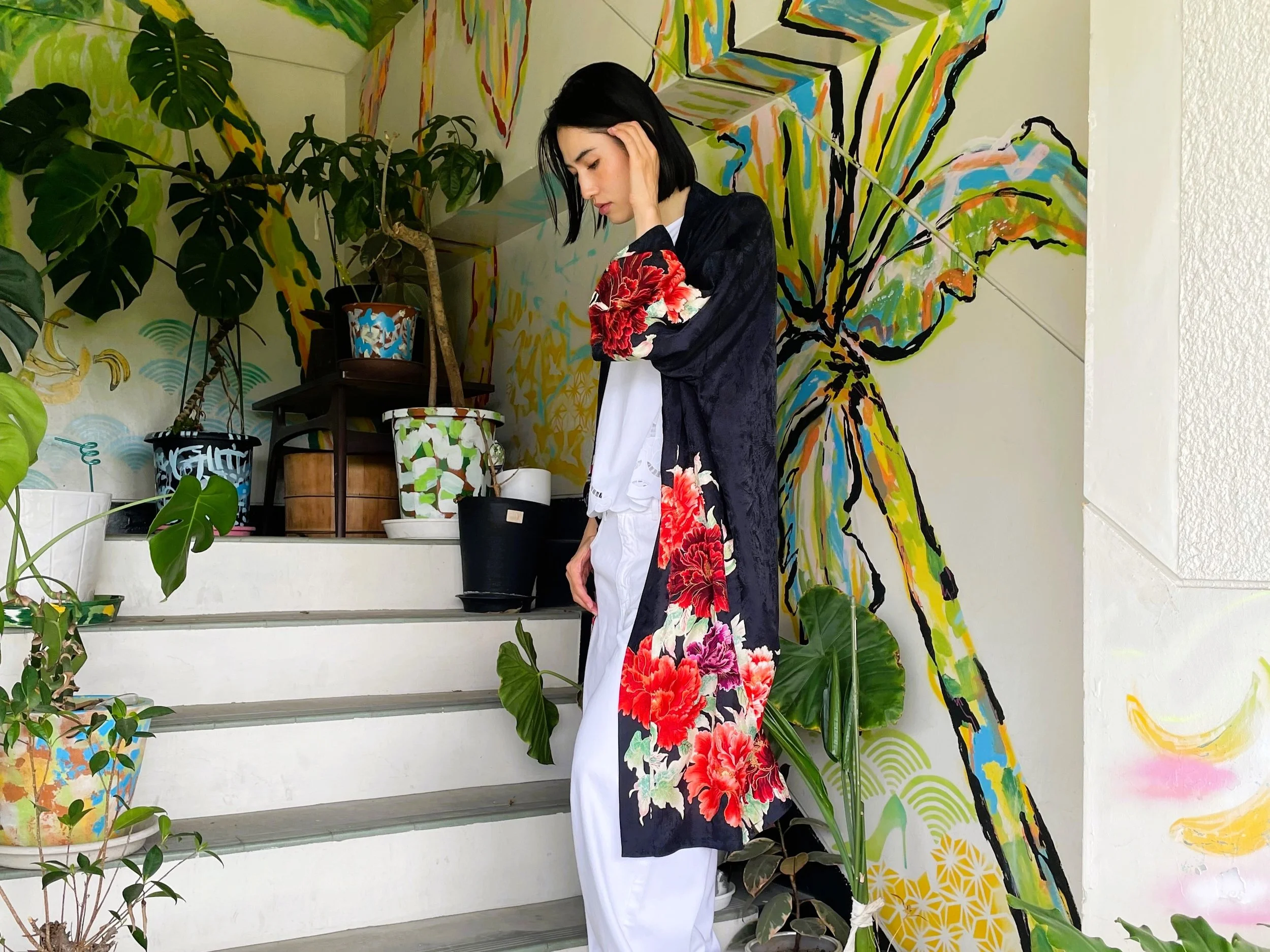
The mountains and waves in the background reflect the rhythms of nature and the flow of life, while blooming peonies symbolize prosperity, abundance, and noble grace.
Softly drifting clouds carry auspicious signs, lending depth and quiet movement to the composition.
This design reflects the refined elegance of classical court aesthetics, later echoed in ceremonial and performance garments, and is distinguished by its dignified and timeless beauty.
Within this composition, where the dragon and Kirin form a single world, there lives a quiet wish—that celestial power and earthly virtue may intertwine, bringing peace, balance, and prosperity.
・Currency : US Dollar (USD)
・70% Cotton / 30% Linen
・Classic-style Aloha shirt
・Coconut buttons
・Wash by hand
・Made in Japan
Color / White and Multi-color
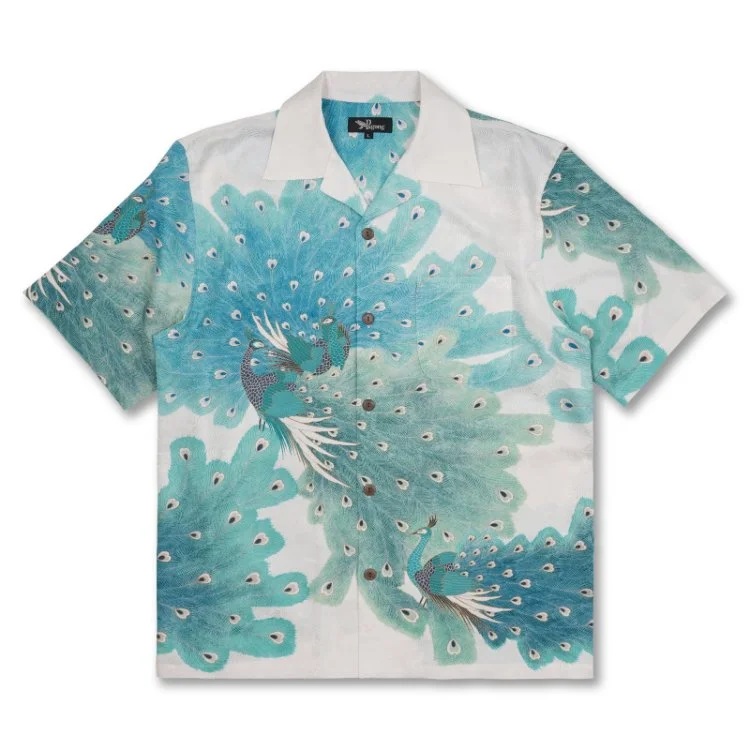
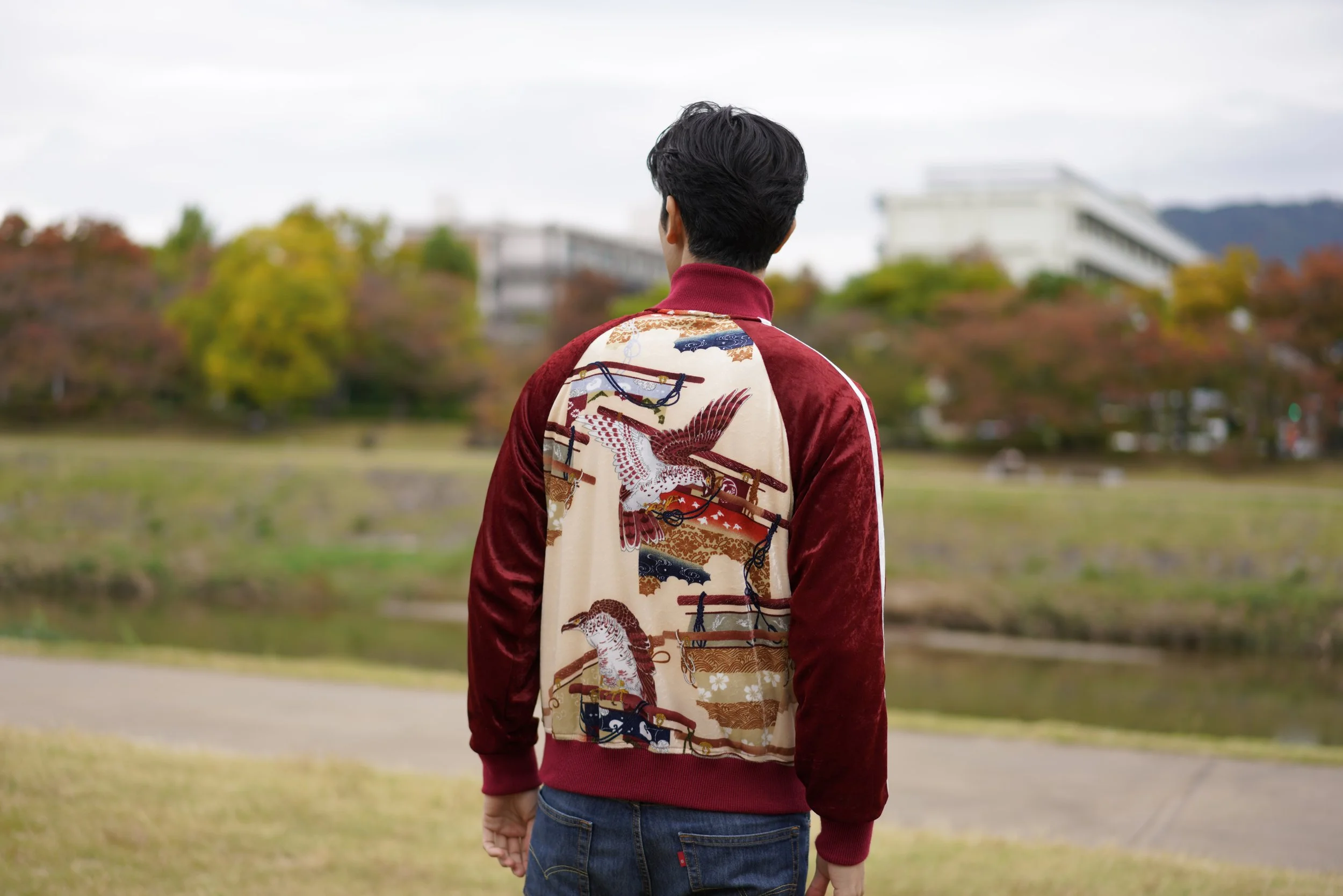
Japanese name / 孔雀 (Kujaku)
-About-
Peacocks are admired for their striking beauty and graceful presence. With their flowing silhouettes and richly layered feathers, they bring a sense of elegance and quiet grandeur to any design.
Their most distinctive feature—the long, radiant tail—creates a dramatic sense of movement and rhythm. When spread, it forms a captivating display of repeating eye-like patterns, giving the motif both depth and visual richness.
In design, peacocks have long been associated with beauty, dignity, and a sense of refined luxury. Their presence adds a feeling of celebration and splendor, making them especially suited to garments intended to stand out with quiet confidence.
In this pattern, the peacock is often depicted with its tail fully extended, allowing its intricate forms to unfold across the surface. The composition balances boldness with delicacy, as each feather contributes to an overall harmony of line and flow.
As a motif, the peacock expresses not only visual brilliance but also a sense of protection and positivity. It carries an atmosphere of elegance, prosperity, and graceful strength—making it a timeless and captivating design element.
・Currency : US Dollar (USD)
・100% Silk (Custom-woven Jacquard )
・Made in Japan
・Classic-fit Aloha shirt
・Coconut buttons
・Dry-clean
Color /Beige and Multi-color
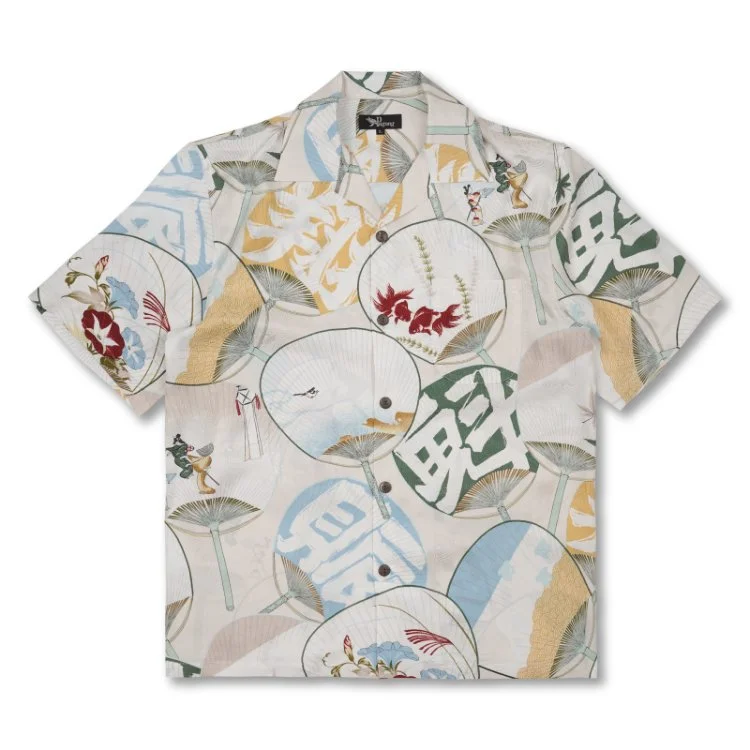
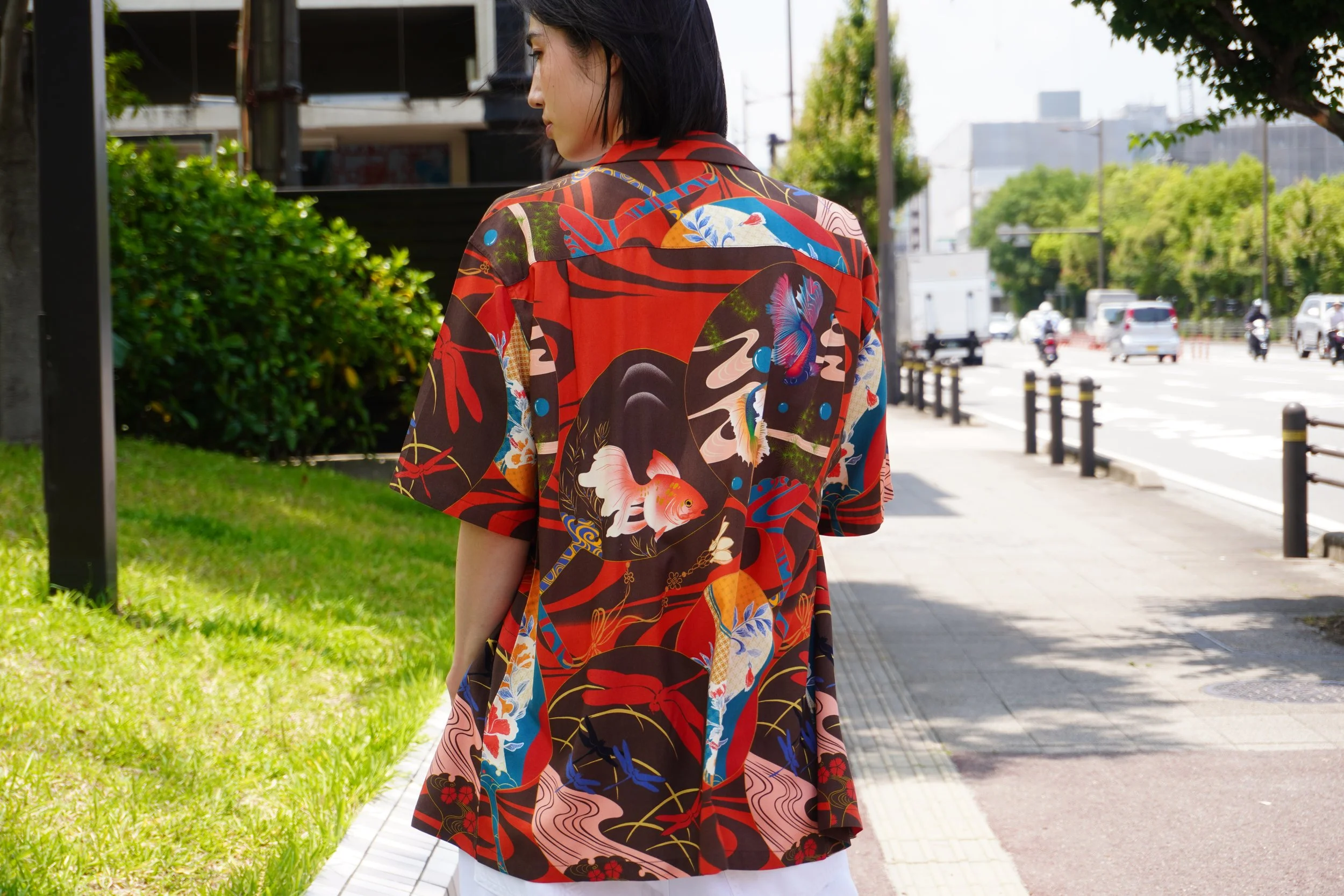
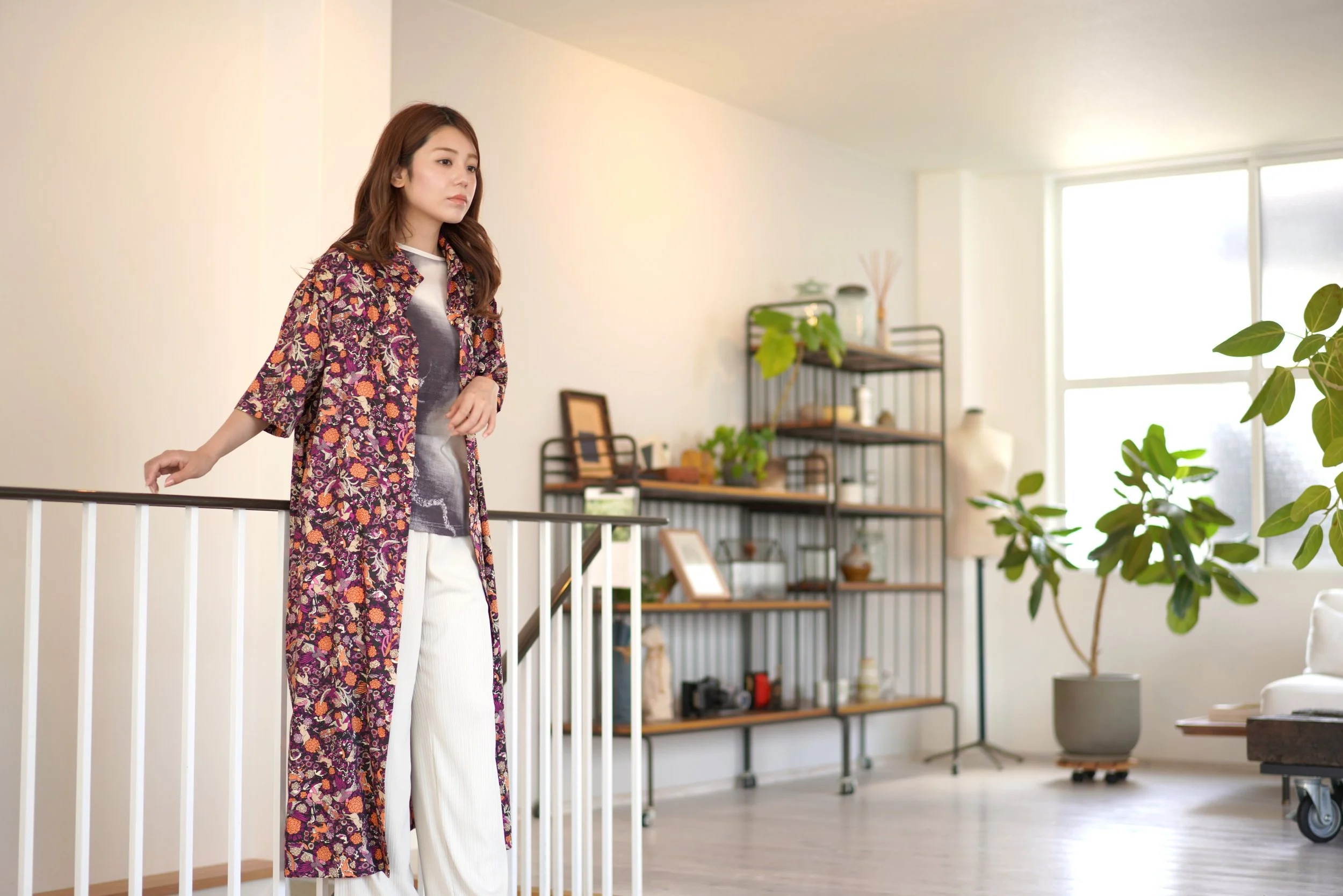
Japanese name / 京涼の団扇(Kyoryō Uchiwa)
-About-
The Kyoryō Uchiwa design captures the essence of Kyoto’s summer scenery.
Inspired by Kyoto-style uchiwa fans, long cherished in daily life as symbols of comfort and coolness, this design expresses Kyoto’s distinctive elegance and the longing for purity and serenity amid the summer heat.
The overlapping fans are adorned with seasonal motifs such as morning glories, goldfish, flowing water, and dancing figures, evoking the vibrant atmosphere of summer.
Each element reflects the changing seasons and carries prayers for happiness and peaceful living.
The auspicious kanji depicted within the fans convey the following meanings:
「魁」 (Sakigake) — to lead the way, to stand at the forefront, and to guide an era forward.
「翔」 (Shō) — to soar freely through the open sky, transcending limitations and rising toward one’s dreams.
「賑」 (Nigiwai) — signifying liveliness, abundance, and prosperity, expressing the joyful gathering of people and the fullness of happiness, much like a festival.
The layered composition of the fans suggests the gentle flow of passing breezes and the quiet passage of time.
It depicts the interplay of light and shadow on summer days, the prayers woven into everyday life, and tranquil moments shaped by people and the wind.
Since ancient times, uchiwa fans have been regarded as auspicious objects, believed to invite good fortune and ward off misfortune. This pattern carries a wish that pure breezes may bring calm and clarity to the heart.
To express the unseen wind as beauty—this is a sensibility passed down through generations of Kyoto’s artisans and artists.
Kyoryō Uchiwa brings this appreciation of the invisible into the present, offering gentle coolness and quiet healing within the summer air.
Like a soft embrace of Kyoto’s summer, this design delivers a tender breeze to the wearer’s heart, adding peaceful blessings to everyday life.
・Currency : US Dollar (USD)
・100% Silk (Custom-woven Jacquard )
・Made in Japan
・Classic-fit Aloha shirt
・Coconut buttons
・Dry-clean
Color /Light Blue and Multi-color
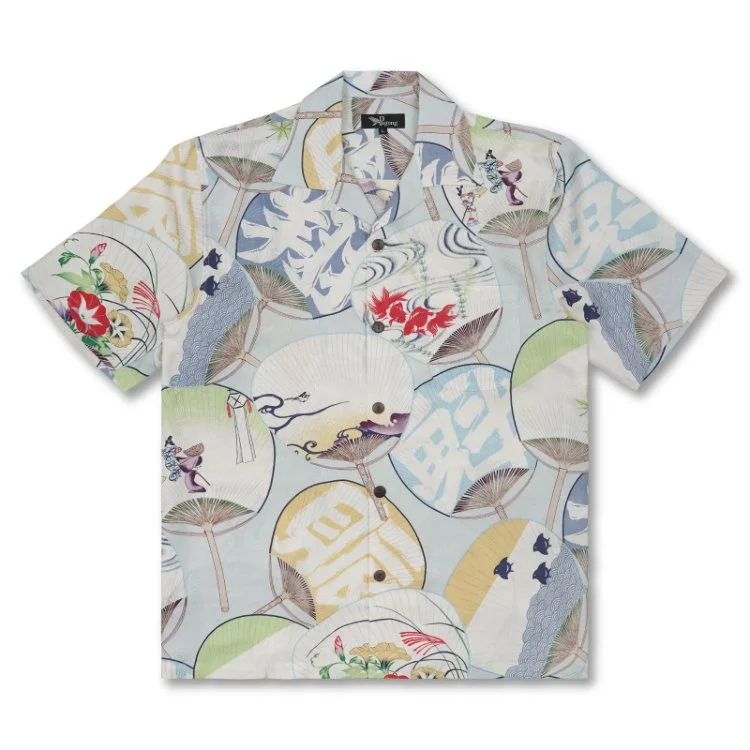
Japanese name / 京涼の団扇(Kyoryō Uchiwa)
-About-
The Kyoryō Uchiwa design captures the essence of Kyoto’s summer scenery.
Inspired by Kyoto-style uchiwa fans, long cherished in daily life as symbols of comfort and coolness, this design expresses Kyoto’s distinctive elegance and the longing for purity and serenity amid the summer heat.
The overlapping fans are adorned with seasonal motifs such as morning glories, goldfish, flowing water, and dancing figures, evoking the vibrant atmosphere of summer.
Each element reflects the changing seasons and carries prayers for happiness and peaceful living.
The auspicious kanji depicted within the fans convey the following meanings:
「魁」 (Sakigake) — to lead the way, to stand at the forefront, and to guide an era forward.
「翔」 (Shō) — to soar freely through the open sky, transcending limitations and rising toward one’s dreams.
「賑」 (Nigiwai) — signifying liveliness, abundance, and prosperity, expressing the joyful gathering of people and the fullness of happiness, much like a festival.
The layered composition of the fans suggests the gentle flow of passing breezes and the quiet passage of time.
It depicts the interplay of light and shadow on summer days, the prayers woven into everyday life, and tranquil moments shaped by people and the wind.
Since ancient times, uchiwa fans have been regarded as auspicious objects, believed to invite good fortune and ward off misfortune. This pattern carries a wish that pure breezes may bring calm and clarity to the heart.
To express the unseen wind as beauty—this is a sensibility passed down through generations of Kyoto’s artisans and artists.
Kyoryō Uchiwa brings this appreciation of the invisible into the present, offering gentle coolness and quiet healing within the summer air.
Like a soft embrace of Kyoto’s summer, this design delivers a tender breeze to the wearer’s heart, adding peaceful blessings to everyday life.
・Currency : US Dollar (USD)
・100% Silk (Custom-woven Jacquard )
・Made in Japan
・Classic-fit Aloha shirt
・Coconut buttons
・Dry-clean
Color / Green and Yellow
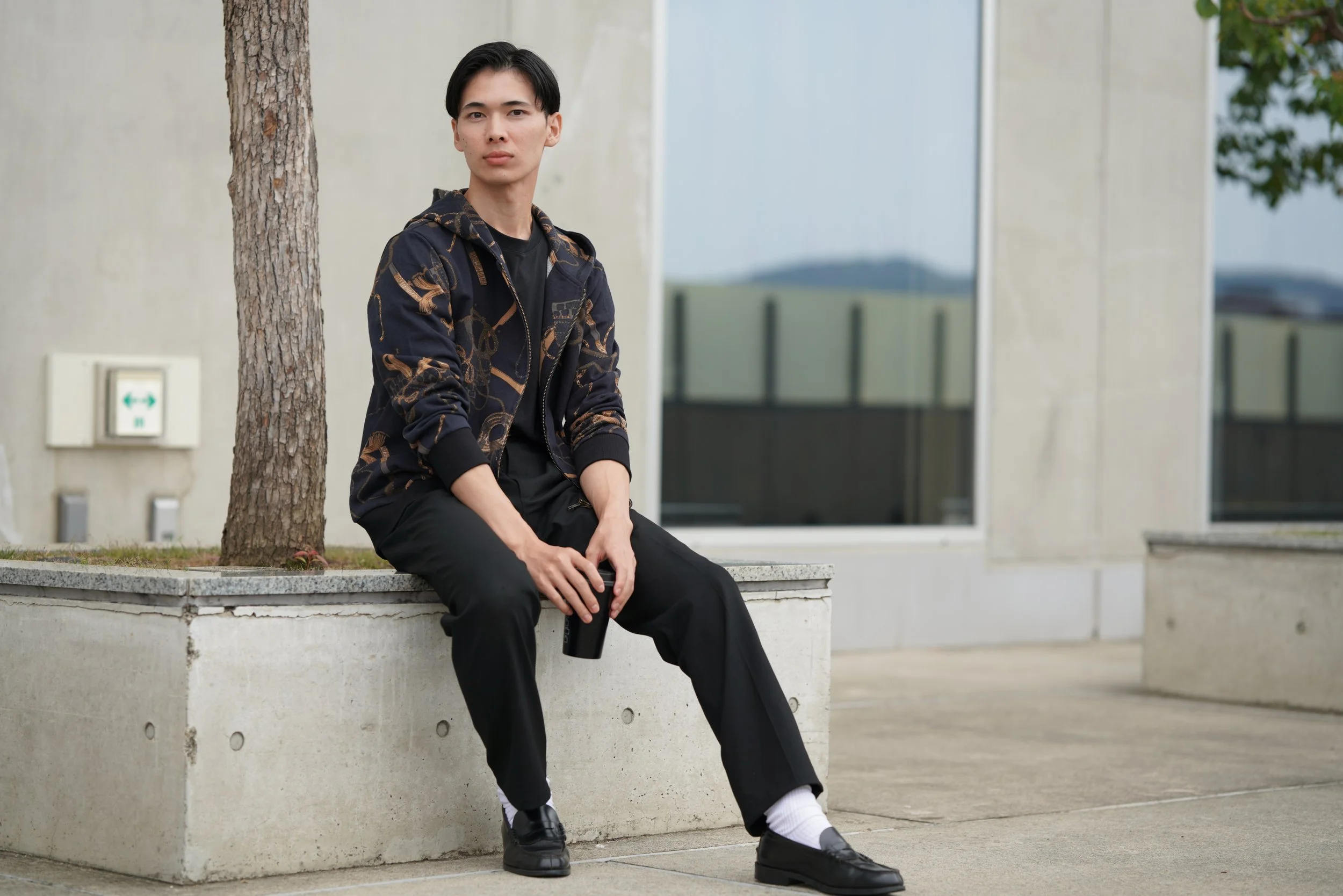
Japanese name / 玉蜀黍(とうもろこし)
-About-
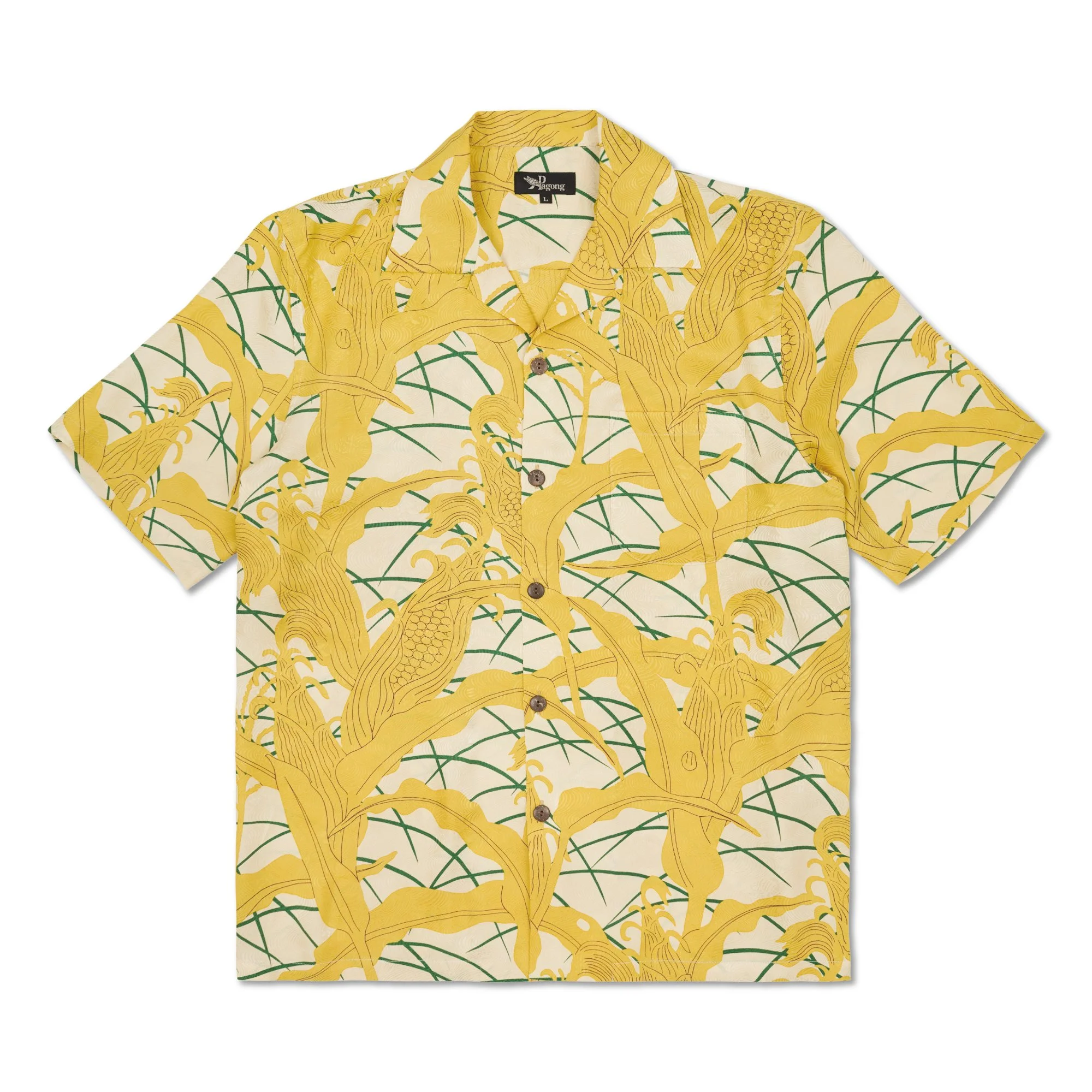
Rooted in the earth and growing straight in the sun, corn is depicted as a symbol of harvest and life. Its neat rows of golden grains evoke the order and abundance of nature, each one seemingly conveying the breath of the earth. The supple curves of the leaves rustling in the breeze and the soft flow of the stalks enveloping the kernels evoke both the strength and gentleness of life, quietly speaking to the beauty of nature's woven forms. Corn was introduced to Japan during the Edo period, initially attracting people's attention as a rare imported crop. Its simple yet powerful appearance eventually blended with the Japanese climate, and by the Meiji and Taisho periods, it was incorporated into textiles and decorative designs as a new natural motif. Though a plant from a foreign land, its shape evokes a sense of nostalgia, and it became a beloved symbol of harvest alongside rice and wheat. Designers discovered a modern sense of beauty in the unique shape, arrangement of grains, and overlapping leaves. They went beyond the realism of nature to project the power of life within abstract rhythms and compositions. Corn depicted as a pattern on kimonos and obi is not simply a plant, but is expressed as a new natural beauty that embodies the spirit of the times and the hopes of the people. This pattern is imbued with joy for the fruitful season and a deep respect for nature. Born from the earth, illuminated by the sun, and eventually bearing fruit, it is also a symbol of the cycle and connection of life. This pattern exudes a sense of undeniable power and warmth in its quiet presence, gently conveying the beauty of humans and nature living together. It is a pattern that makes you feel that nature is at its most artistic.
・Currency : US Dollar (USD)
・70% Cotton / 30% Linen
・Classic-style Aloha shirt
・Coconut buttons
・Wash by hand
・Made in Japan

Color / Red and Multi-color Size Chart Care Instruction
Japanese name / おもちゃ - Omocha - Toys
This is a pattern from the early Showa period. It is a kimono for girls. It features a variety of nostalgic toys.
Taiguruma (fish-snake wheel), Kazaguruma (windmill), Inuguruma (dog-drawn cart), Hina dolls, Den-den taiko drums, Sho flutes, Hagoita (battledore), Koma (top), Buriburi (buri-buri), Hoko (floor), etc. There are many more fun toys. It is a celebratory pattern that prays for the healthy growth of children.
The Kara Uchiwa fan with a chrysanthemum pattern originates from a Chinese story, "Kikujido." It is said that Kikujido lived in a valley deep in the mountains, and lived to be hundreds of years old as a child by drinking the valley water that dripped from the morning dew on the chrysanthemum leaves. It is immortal youth and longevity. The instruments are den-den drums, sho flutes, bells, and buri-buri... musical instruments. The musical instruments are ohayashi, which make sounds to call the gods. Musical instruments are auspicious things that invite the blessings of the gods. The crown with plum blossoms on it means success in life by demonstrating literary talent. The kocho (butterfly) is a costume worn by children in gagaku when they dance at Buddhist events to appease the souls of the dead.
There is also a chapter on the kocho in the Tale of Genji, which depicts the elegant life of the dynasty and derives an image of wealth.
Since it is New Year's Day that people wear formal attire, there are also hagoita and tops, which are New Year's toys. There are also treasures . You can see jewels, gold bags, scrolls, weights, raincoats, rhinoceros horns, cloves, and seven treasures. These patterns are filled with the love of parents who wish for their children to live healthy, wealthy, and spiritually rich lives.
・Currency : US Dollar (USD)
・100% Silk (Custom-woven Jacquard )
・Made in Japan
・Classic-fit Aloha shirt
・Coconut buttons
・Dry-clean
・Currency : US Dollar (USD)